

UNC Asheville Recognition Highlights Student Research and Helene Recovery |
Undergraduate projects connect classroom work with river restoration and local environmental needs |
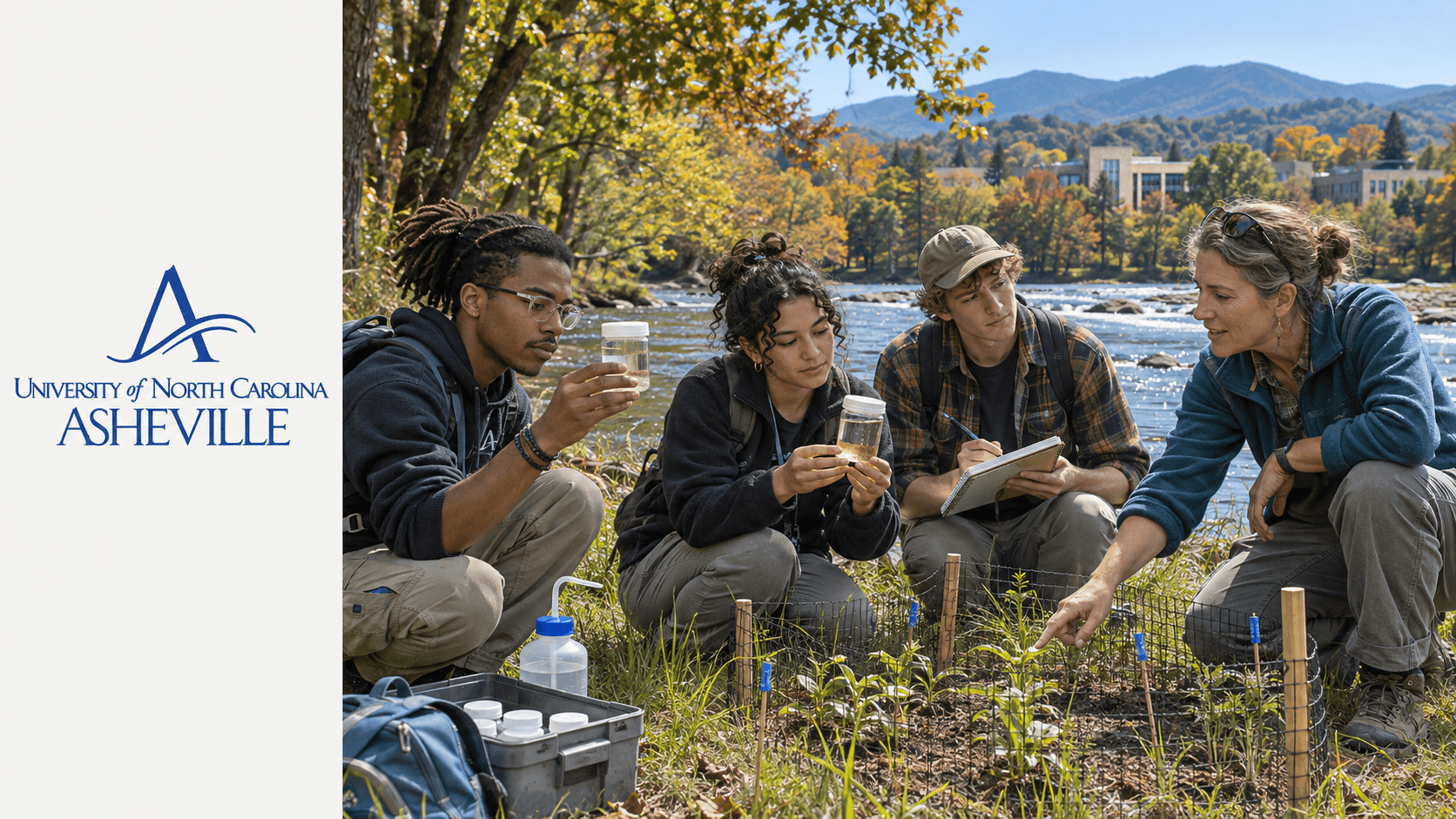
A new mention of UNC Asheville among notable North Carolina colleges is drawing attention to something the university has emphasized for decades: students doing original research before they graduate.
The university was included in an October editorial assessment of 15 institutions that considered reputation, selectivity and undergraduate research opportunities.
That list is an editorial assessment rather than an official accreditation ranking, but it puts a spotlight on an important part of the campus experience.
UNC Asheville's Undergraduate Research and Creative Activity Program brings students and faculty together on projects that can produce findings, public presentations and creative scholarship.
The university says more than 65 percent of students participate in original research or creative work during their undergraduate education.
At many institutions, independent research can be associated chiefly with graduate study, making the scale of undergraduate participation notable.
Students at UNC Asheville can present findings at research symposia, pursue grants and share work beyond the classroom.
The school has a long history in this area, including helping establish the National Conference on Undergraduate Research.
Research is not limited to laboratory benches or academic journals.
In Western North Carolina, some faculty and student projects connect directly with community concerns following Tropical Storm Helene.
These include efforts related to the French Broad River watershed, where restoration work can involve streambank stabilization, native vegetation and understanding how waterways respond to disturbance.
Environmental research can also involve native wildlife, invasive species and the health of mountain stream habitats.
Those topics have immediate relevance to residents who have watched floodwaters reshape riverbanks and greenways.
Other students investigate questions in chemistry, public health, economics, humanities and the creative arts.
Hands-on research asks students to formulate questions, evaluate evidence and explain their conclusions, skills that carry into employment and further education.
The university provides grants and opportunities for students to present work at professional conferences, helping expand access to experiences that can otherwise be costly.
Campuswide research events also let students from different departments see how their classmates approach complex problems.
The recognition comes as Western North Carolina continues to examine what long-term recovery means for its ecosystems, infrastructure and communities.
A research project does not solve every local challenge, but it can provide useful information, new approaches and a training ground for future professionals.
The significance of UNC Asheville's research culture lies in that connection: students are not simply studying the mountains around them, but learning ways to contribute to the region they call home. |
0 Comments
Join the conversation
Be the first to comment
Share your thoughts above.