

Buncombe County Expands Food-Waste Composting Capacity |
Regional demand is growing as local partners seek better organics collection options |
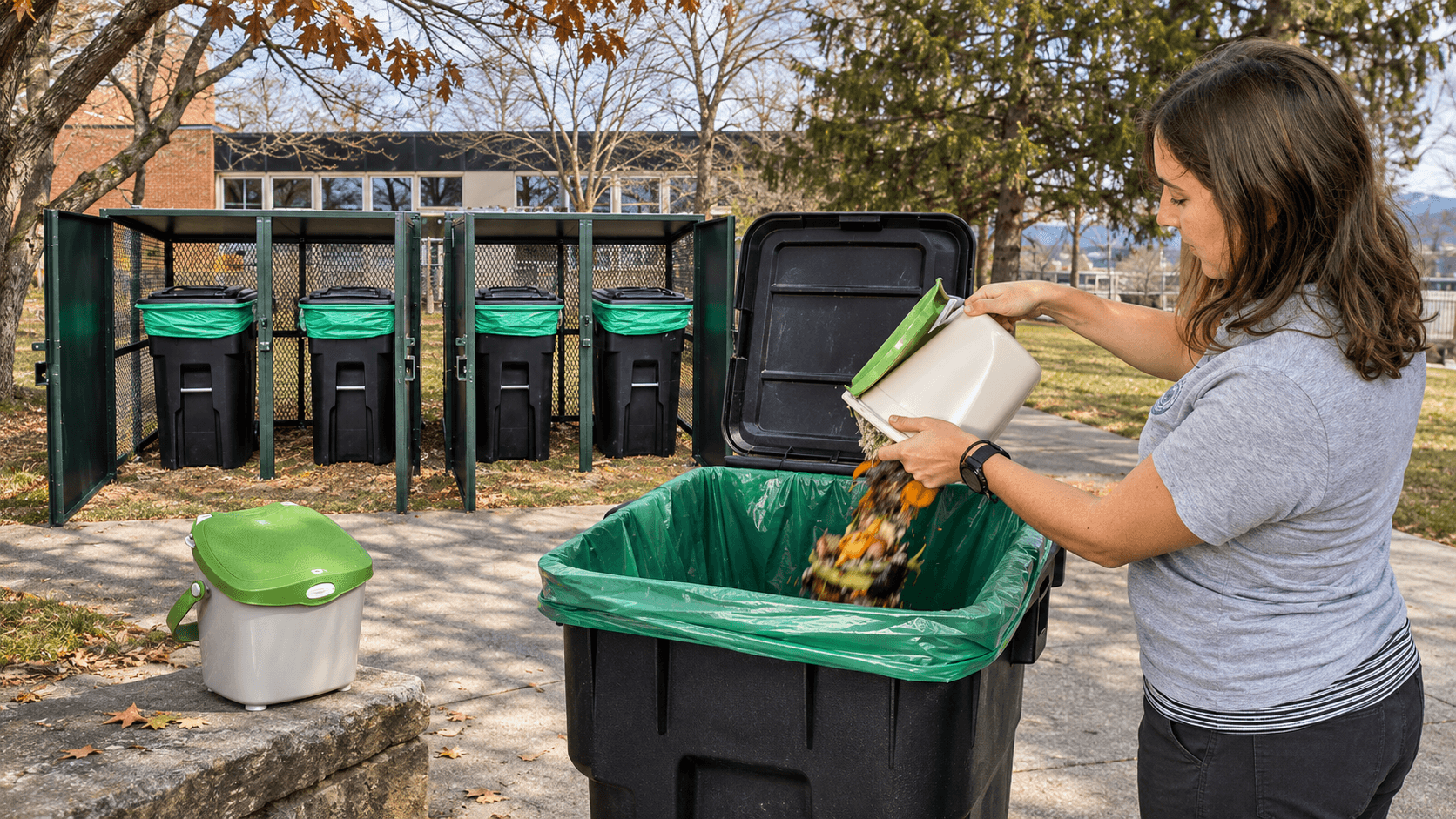
The kitchen scraps that fill local trash cans are becoming a larger part of Western North Carolina's discussion about landfill space and environmental stewardship.
Buncombe County and regional partners are working to expand food-waste composting, an approach that turns organic materials into a soil-building resource rather than burying them with ordinary garbage.
Local demand for compost processing has grown faster than the region's convenient disposal options, creating challenges for households, restaurants and institutions that want to participate.
County solid-waste officials have described a new composting facility intended to strengthen long-term processing capacity.
The operation mixes food scraps with carbon-rich material such as mulch and relies on managed biological decomposition to produce usable compost.
This kind of processing requires more than an empty pile: collection systems, equipment, appropriate sites, contamination controls and knowledgeable operators all matter.
The goal is to make participation practical while keeping food waste out of landfills, where organic material can generate methane as it breaks down without oxygen.
Partners include the City of Asheville's sanitation program and local organizations that work on compost education and collection.
At a November 7 community event, groups planned to explain the process and connect residents with available services.
Education is part of the infrastructure challenge because a compost stream contaminated with plastic, packaging or unsuitable materials creates costly problems for processors.
Residents can start by checking whether their neighborhood is served by a collection provider or whether a community drop-off program accepts household food scraps.
Local collection rules vary, and items such as compostable packaging should not be assumed acceptable without confirmation.
Households with suitable outdoor space may also consider home composting, while taking precautions that are appropriate in bear country.
Businesses and schools face different challenges because their food-waste volumes, pickup requirements and storage arrangements can be much larger.
The region's broader conversation is about the cost and convenience of making organics diversion routine.
More composting capacity can support waste reduction, but its success depends on collecting clean materials and building stable demand for the finished product.
The practical takeaway is simple: Western North Carolina is building more options, and participation will work best when residents and organizations understand exactly what their local service accepts.
County solid-waste updates and established local compost providers are useful starting points for anyone ready to take the next step. |
0 Comments
Join the conversation
Be the first to comment
Share your thoughts above.