

Hendersonville Completes 27-Acre Lower Mud Creek Flood Resilience Project |
Restored wetlands and greenways aim to reduce flood risks for nearby properties while creating new public space |
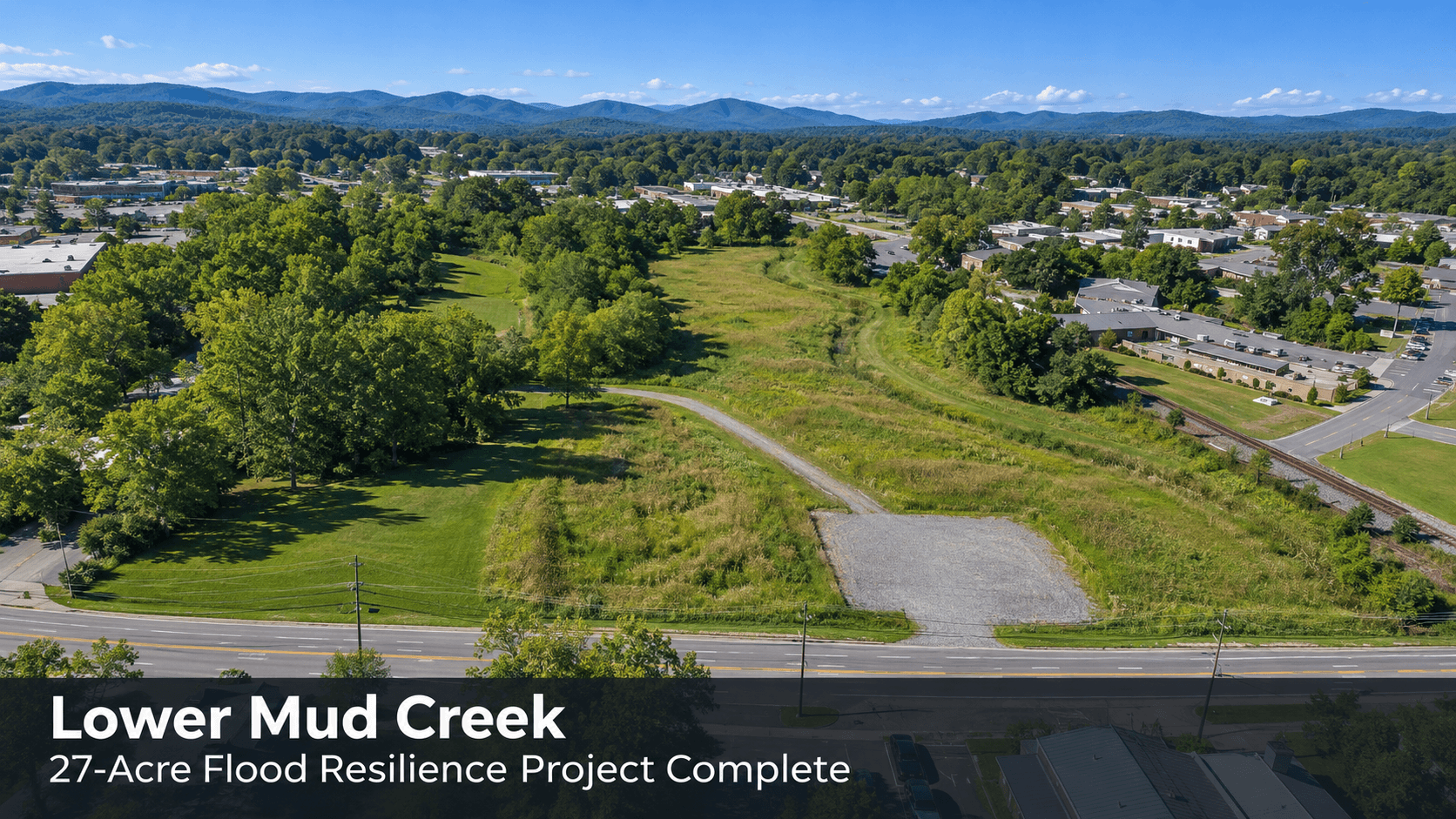
A new milestone in Hendersonville's flood recovery
Hendersonville has completed a 27-acre floodplain restoration along Lower Mud Creek, an investment designed to give stormwater more room to spread while restoring habitat and adding space for walking.
City, county and state officials marked the achievement with a ribbon-cutting and a tour of the site in the 500 block of South Grove Street.
The project connects Mud Creek and its tributaries more directly with their natural floodplain, reversing some of the changes made over generations to drain or develop the valley.
What was restored
Improvements include approximately 2,300 linear feet of tributary streams, 1,500 linear feet of channel restoration along Mud Creek, 8.5 acres of wetland restoration and 9.2 acres of riparian habitat enhancement.
New water-control structures, native plantings and pedestrian bridges are accompanied by about 2,500 feet of paved greenway and 1,600 feet of natural-surface trail.
The design gives smaller storms more places to store and slowly release water while providing more room for floodwaters during larger events.
Potential benefits for nearby neighborhoods
Engineers estimate the project creates roughly 20 acre-feet of additional flood storage and could reduce flood risk for as many as 93 nearby properties, collectively assessed at about $60 million.
Those figures are projections of flood-risk reduction, not a guarantee that surrounding properties cannot flood during future storms.
The area has experienced flooding for decades, with past stream modifications and surrounding development limiting the creek's ability to handle high water.
Community access and partnerships
The completion also creates opportunities for residents to experience newly restored wetlands and creekside habitat.
State water and land conservation programs, Hendersonville and regional partners supported planning, engineering and construction.
For Western North Carolina communities still weighing how to rebuild after Helene, the project demonstrates a strategy that combines flood preparedness, water quality, wildlife habitat and public recreation.
The restored grounds have been opened for community enjoyment, though visitors should observe all posted conditions and construction or maintenance notices. |
0 Comments
Join the conversation
Be the first to comment
Share your thoughts above.