

Biltmore Village Restoration Moves Forward With Historic Approval |
The city plans to restore brick sidewalks, improve accessibility and replace aging street trees following Hurricane Helene |
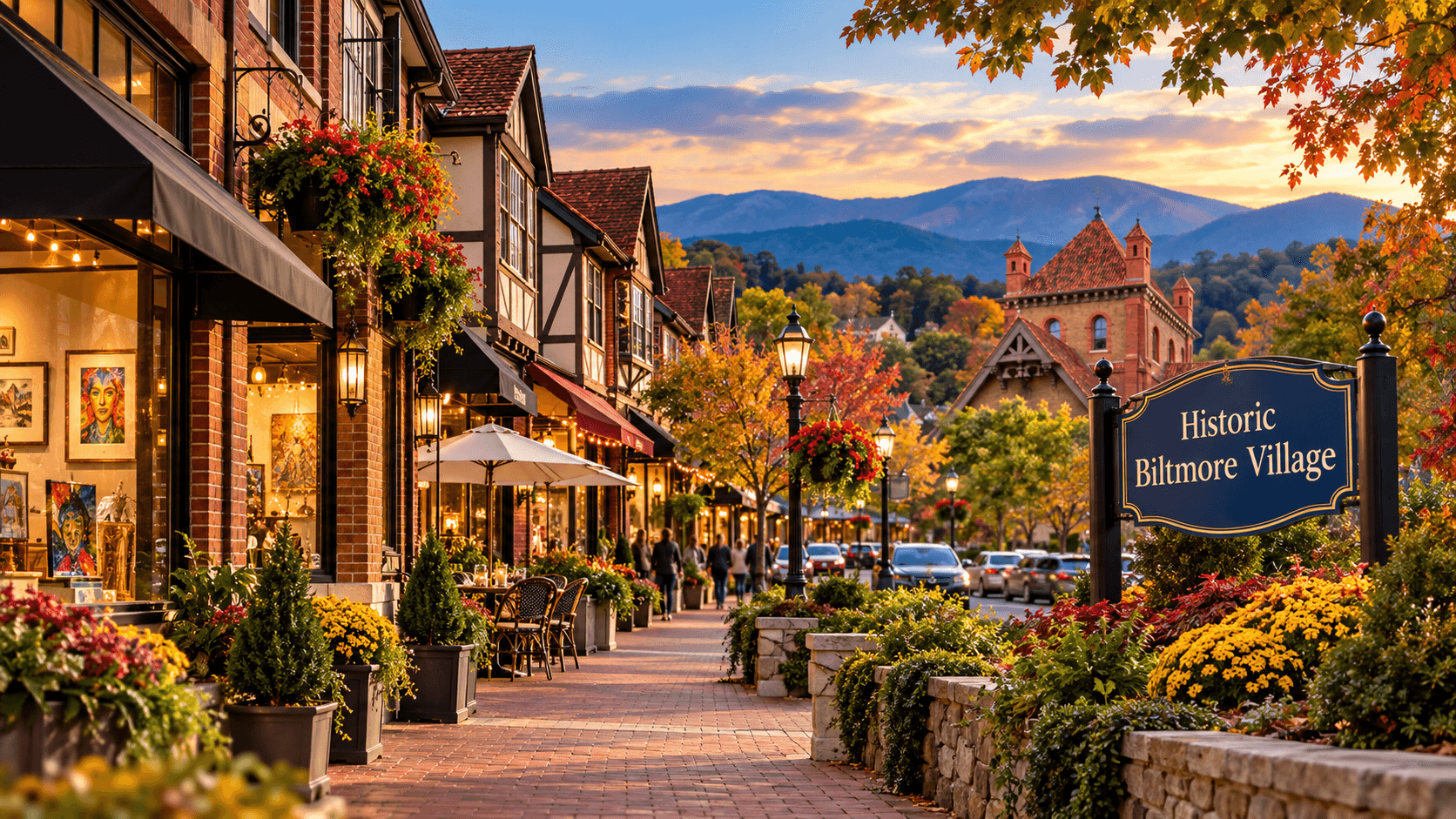
Biltmore Village is moving toward another significant stage of recovery after Asheville's Historic Resources Commission approved plans to restore sidewalks, curbs and other streetscape features in the historic district.
The approval represents an important milestone for businesses and residents still working through the consequences of Hurricane Helene, although construction and final project completion remain ahead.
What will change in Biltmore Village?
The city plans to rebuild historic brick sidewalks, repair or reset granite curbs, improve pedestrian ramps and crossings, and replace selected street trees along Biltmore Plaza, Kitchin Place, Boston Way and Swan Street.
Those improvements are intended to make walking safer and improve access for people with disabilities while preserving the neighborhood's historic character.
Biltmore Village's distinctive appearance comes partly from its original design as a community associated with George Vanderbilt's estate, with planning influences from Frederick Law Olmsted and architect Richard Morris Hunt.
City staff have emphasized that historic materials and design standards will guide restoration decisions, rather than treating the work as an ordinary pavement replacement project.
How is the restoration funded?
The core project is supported by approximately $2.49 million from North Carolina's Small Business Infrastructure Grant program through the Department of Commerce.
A separate tourism-related investment of $296,179 has been designated for a pedestrian-safety component at Biltmore Plaza.
Funding supports a defined group of corridors, not every street in the district, and officials are exploring ways to expand the work when resources allow.
Why tree replacement has drawn attention
Street trees are part of Biltmore Village's familiar appearance, but aging trees, storm damage, sidewalk conditions and construction requirements create competing priorities.
The project includes assessment of tree health and risk, utility conflicts, historical landscaping plans and public comments to determine which trees should be retained or replaced.
Replacements and streetscape landscaping are expected to remain important parts of the design.
What the project will not accomplish
City project materials stress that the streetscape work is not a comprehensive flood-mitigation or stormwater-overhaul project.
That distinction matters in a commercial district where businesses and property owners remain concerned about future flooding.
Repairing damaged sidewalks and improving crossings can help restore daily activity, but it will not by itself prevent the kind of major flood damage seen during Helene.
When could construction begin?
City planning materials describe construction occurring between late 2026 and early 2028, while a tourism project profile lists completion by fall 2028.
The city issued a construction solicitation in October, another sign the project is moving toward implementation.
Specific work schedules and street disruptions will depend on contracting and construction plans, including efforts to limit impacts on businesses.
Why this matters for the wider region
Biltmore Village is a shopping and cultural destination as well as a working neighborhood, so improving its public spaces can support economic recovery beyond a single block.
The commission's approval is a step forward, not a declaration that restoration is finished.
Residents and visitors should continue checking current city updates as the project moves from design and review toward on-the-ground work. |
0 Comments
Join the conversation
Be the first to comment
Share your thoughts above.